










Building a Rugged Compact Pedalboard for the Road

Building a Rugged Compact Pedalboard for the Road
When you hit the road, every detail of your rig starts to matter more. A pedalboard that's too fragile, too bulky, or too fiddly to tune can drain your energy before you even step on stage. The opposite is true, too: a rugged, compact pedalboard designed for travel can be a quiet workhorse that stays in tune, protects your pedals, and keeps your signal clean no matter where you're playing. In this guide, you'll find a practical, field-tested approach to building a compact, road-ready pedalboard that can survive the bumps, rain, and routine rigors of gigging away from home.
This post walks you through planning, materials, layout, power, cabling, enclosure design, and real-world build steps. It blends craft and practicality so you can tailor a solution to your pedal lineup, budget, and preferred playing style.
Define Your Requirements: Start with the End in Mind
Before you cut any metal or trim any Velcro, outline what you actually need. The road punishes every weak link, so a clear spec helps you avoid overbuilding or underbuilding. Consider these questions:
What size do you need? Think about your typical pedal count, the width of your board, and space for a small power supply or a secret stash of cables. A common target is a compact 10-14 inch width for a minimalist six- to eight-pedal setup, with a depth of 12-16 inches to keep your feet comfortable. If your board grows, you'll appreciate a modular approach.
Which pedals absolutely must be on the board? Some players keep buffering, drive, and tuner on the board, while others focus on time-based effects or modulations. Decide which pedals demand close proximity and which can live in a quiver or on a separate pedal shelf.
What power strategy works for you? On the road, isolated power supplies reduce hum and noise. If you already use a power brick, you may want to mount it under the board or inside a case lid. If you prefer a simpler setup, you can daisy-chain a compact set of pedals-but make sure the chain doesn't introduce ground loops or voltage sag for sensitive pedals.
How rugged must the enclosure be? Consider climate (humidity, rain), temperature swings, and the risk of being bumped or dropped. Do you need weather sealing, splash resistance, or just a rigid base with good padding? Your answer drives your material choices and construction details.
What is your budget and build time? A go-to board can be built in a weekend with stock parts, but a truly rugged, weather-sealed solution may justify a longer process and a higher price. Decide your ceiling and then plan to meet a minimum viable product first.
Frame, Case, and Materials: The Skeleton of Durability
Ruggedness starts with the chassis. You want something that stays flat, keeps its pedals in place, and protects electronics from shock and moisture. Here are reliable options and how to think about them:
1) Aluminum extrusion frame with a hard top plate: A lightweight, rigid backbone that resists torsion. Anodizing adds corrosion resistance, and you can mount pedalboard perforations or rails for modular patching. This is a favorite for DIY builders who want precise dimensions and repeatable results.
2) Aluminum sheet with raised lip and riveted/or welded corners: If you're working with flat stock, you can bend and seal edges to create a tough, field-friendly shell. It's a little more time-consuming but yields a robust result.
3) Durable flight case chassis with a lid: For maximal protection on flights and buses, a small flight-case approach (think SKB or Gator style) can be excellent. It tends to be heavier and pricier, but you gain weather resistance and shock protection.
4) High-strength plywood or plywood with a hardwood veneer (with an aluminum or steel frame): A budget-friendly alternative that, when sealed and mounted properly, can be surprisingly tough. Use marine-grade plywood for humidity resistance and finish with a watertight varnish or polyurethane topcoat.
Key design tips:
- Choose a non-slip surface for the pedal area, such as a rubber mat or anti-slip sheets, to prevent pedals from creeping during performance.
- Plan for heel-toe space and a comfortable stride. A compact board should still feel like a natural platform under your foot.
- Include mounting points for a power supply, patch panels, and potential future pedals. A well-thought mounting scheme saves time on tour and reduces cable clutter.
Weather sealing doesn't have to be extreme, but light protection helps. A weather-resistant lid, a gasketed edge, or at least a moisture-resistant coating on the external shell will keep rain splash and humidity away from sensitive components. If you expect heavy rain or outdoor gigs, consider a lid with a small integrated rain cover or a detachable weather sleeve for climate control and quick coverage.
Powering Your Board on the Road: Clean, Isolated, Flexible
Power is the unsung hero of a road-ready pedalboard. Noisy, unstable power is a magnet for hum and drift, and it can ruin performances in ways that aren't obvious until you're onstage. Here are practical power strategies and components to consider:
Isolated outputs: If possible, use a power supply with isolated outputs to prevent ground loops and cross-talk between pedals. This is especially important if you have high-gain amps or sensitive analog electronics on the board.
Current capacity: Calculate your total current draw. A typical compact board might include tuners (2-5 mA), buffers (5-15 mA each), drive pedals (20-40 mA each), delays, reverbs, and modulation pedals (up to 100 mA each for heavy digital effects). A conservative estimate for a six-to-eight-pedal set is 300-700 mA at 9V, plus any 12V or 18V segments if you're using multi-volt pedals.
Voltage options: Most pedals run on 9V, but many modern devices require 12V, 18V, or even 24V. Decide whether you want a single 9V rail with adapters/splitters or a mixed-rail setup with dedicated outputs for different voltages. A small, well-designed multisupply can handle mixed demands, but keep cable runs short and organized to prevent voltage drop on the far end of the board.
Isolation and protection: Use a power supply with short-circuit protection and overcurrent protection for each output. You'll also want a built-in transformer or PSU that resists power surges and a locking DC jack option to prevent accidental unplugging on stage.
Patch design around power distribution: Mount the power supply so that its cables route away from signal cables to minimize interference. Route power cables along one side of the board and keep them separate from audio cables whenever possible. If you must cross power and audio lines, keep the crossing point at right angles to minimize coupling.
Cable choices for power: Use high-quality DC cables with proper gauge for the current you need. Keep the length short to minimize resistance and voltage drop. Consider adding a small fuse (rated appropriately for total current) near the power input for extra protection.
Patching, Cabling, and Signal Routing: A Clean, Reliable Path
One of the most underrated aspects of a road-ready setup is how you route cables around the board. A tidy, robust patch system reduces failure points and makes on-the-road changes quick and predictable. Here are practical strategies:
Patch panels versus daisy chaining: For a durable live rig, a simple 2-4 patch panel approach can be far more reliable than a cluttered tangle of cables. Each pedal's input/output can connect to a short, labeled cable that runs to a central patch panel or a small loop at the edge of the board. This reduces the risk of tugging and accidental unplugging during performance.
Use short, quality cables: Invest in ultra-flexible, low-noise guitar patch cables with right-angle plugs where possible. Short cables minimize capacitance and noise pickup, especially for high-gain or long-path signal routes. Labeling each cable helps you diagnose issues quickly on the road.
Shielding and ground loops: Pay attention to shielding on all audio cables and keep power cables separate. If you notice a hum when a particular pedal is engaged, try re-routing its power and signal cables, or use a different patch order. In some cases, you may add a ground-lift switch or isolated power outlet to isolate troublesome pedals.
Cable management hardware: Velcro ties, cable channels, or low-profile cable clips along the underside of the board help you secure cables and avoid snagging. Consider a small recessed channel for patch cables that's covered by a removable top plate for maintenance.
Labeling and quick changes: A simple labeling system with pedal names and patch numbers makes setup and tear-down predictable. A small dry-erase panel or a laminated patch sheet can be attached to the board's lid for quick notes about changes between gigs.
Layout and Ergonomics: A Board You Can Trust with Your Feet
Layout matters not only for aesthetics but for speed and reliability on stage. A good layout helps you access the most-used pedals instantly and reduces the risk of stomping the wrong control. Consider these practical guidelines:
- Place the most frequently used pedals within easy reach, typically toward the center or front edge of the board for quick stomps.
- Stack time-based effects (delays, reverbs) toward one side so you can reach them without crossing over other cables.
- Allow space for a tuner or a buffer at the edge so you can mute quickly if needed.
- Include a small buffer or boost at the front if you rely on guitar pickups with high impedance to stabilize the signal before distortion or modulation.
- Consider a slight elevation at the back of the board to match the angle of your foot for easier control.
Non-slip surfaces are essential. A rubber mat under the pedal area gives traction and dampens minor shocks. If you travel with a heavy foot or play aggressively, you'll appreciate the extra grip and the reduced risk of pedals sliding under your feet mid-song.
Durability, Weather Resistance, and Maintenance
Road gear must endure a lot. Dust, humidity, temperature swings, and the occasional rain shower can all take a toll. You can build resilience by choosing materials and construction methods that handle abuse gracefully:
- Seal the lid with a simple gasket to prevent dust and moisture from seeping into the interior (even a thin rubber or foam gasket can help).
- Use corrosion-resistant hardware (stainless steel screws, aluminum standoffs) to resist rust in damp environments.
- Line the interior with closed-cell foam or a custom-cut padding to cushion pedals and electronics from shocks the moment the board is bumped or dropped.
- Employ a rugged latch system or cam-lock latches for secure closure during transport. Quick-release features can be helpful for rapid setup and tear-down.
- Put a lid or cover on the top that helps keep gear dry when the board is on the ground during rain or near a pool of water. If you frequently work outdoors, consider a waterproof or water-resistant cover that can be deployed quickly between gigs.
Routine maintenance pays off: wipe down your pedals and the board after gigs to prevent salt from sweat, humidity, or dust from accumulating. Check the screws and mounts every few months and tighten any that have loosened with use or vibration. Inspect power connectors and patch cables for wear, and replace them if insulation or shielding shows signs of wear. A simple moral: a well-maintained board is a more reliable board.
Build Steps: A Practical, Hands-On Guide
Here's a straightforward, modular approach to building a rugged compact pedalboard. Adapt the steps to your specific needs and tools. The emphasis is on repeatability, ease of maintenance, and field practicality.
Step 1: Plan and sketch
Draw a quick floor plan of your pedals, noting dimensions, and decide how you'll lay out inputs and outputs. Decide where you'll place the power supply and the routing panels. Sketch a side view to confirm clearances for cable runs and for your foot movement. Decide whether you'll mount mounting rails for pedals or simply lay them on a plate with Velcro strips.
Step 2: Select materials and hardware
Choose your base plate material (aluminum, high-density plastic, or reinforced plywood) and the enclosure's walls. Gather hardware: screws, spacers, velcro, patch cables, power cables, cable ties, grommets for routing holes, a gasket for sealing, and a latch mechanism. If you're using an aluminum frame, cut precise holes for mounting points and channels for power cables.
Step 3: Build or prepare the enclosure
Prepare the base plate and the lid. If you're using a flight-case or a pre-fabricated case, skip to the mounting steps. If you're fabricating from scratch, drill holes for pedal mounting, cable runs, and a small power supply mount. Sand and deburr edges for safety. If you're adding a gasket, install it around the lid edge to seal against moisture.
Step 4: Mount the power supply
Attach the power supply to a secure location on the board using mounting hardware or a shelf inside the enclosure. Ensure the layout keeps power cables away from signal paths. If you're using multiple outputs, route them to a central terminal block or a 1U panel so you can access them quickly during setup and troubleshooting.
Step 5: Install a patch panel or routing shelf
Mount a small patch panel or routing shelf along the edge of the board. Use hot glue or double-sided tape for a temporary patch panel, but consider screws or stand-offs if you want a long-term solution. Create a neat set of channels for the cables so they don't interfere with foot action.
Step 6: Mount pedals
Place pedals in their intended positions and attach them with Velcro or, for a more permanent solution, screw-in mounts or brackets. If you're using heavy pedals, consider a couple of threaded inserts to distribute force and avoid warping the base.
Step 7: Run signal and power cables
Run power cables from the power supply to each pedal. Then run audio cables from pedal to pedal, or to a central patch panel. Route patch cables in a clean, flat pattern, using Velcro to secure them and reduce movement. Keep a small margin of slack to avoid tension on plugs.
Step 8: Label, test, and tweak
Label each patch and each pedal's power draw. Power up and test the signal path with the guitar or bass you use. Verify each pedal responds correctly, test with bypass loops, and listen for hum or hiss. Adjust routing and power distribution as needed to minimize noise and maximize stability.
Step 9: Seal and finalize
Install the lid, seal the gasket, and secure latches. Confirm that the board remains flat and all cables are secured. Do a final drop test by gently lifting and moving the board to ensure nothing comes loose. Pack away with a protective cover if you're traveling by air or vehicle to protect from abrupt temperature changes and impacts.
Testing, Troubleshooting, and Field Readiness
Road testing is the best way to learn what works and what doesn't. Here are practical checks and fixes you can apply after your first build:
Signal integrity check: Test the path with your guitar or bass, slowly stepping through each pedal combination to confirm your tone remains steady across the chain. If you hear crackling or intermittent signal loss, inspect patch cables for poor connectors or loose jacks. Swap in shorter, more robust cables if needed.
Power stability check: Use a multimeter to verify that each pedal receives the correct DC voltage, especially on pedals that draw more current. If you notice voltage drop when you switch on a high-demand pedal, consider upgrading the power supply or re-wiring the rails so high-current pedals aren't powering through the same lash-up.
Ground noise diagnosis: If you hear hum, try isolating pedals one by one to determine which is introducing ground noise. You can often solve this by re-routing power cables, changing pedal order, or using better shielded cables. If hum persists, consider an isolated power supply with separate outputs for those pedals.
Durability test: Carry the board up and down stairs, across gravel, and on a few short road trips. Check for loose parts, pedal misalignment, and strap wear. If you notice creaks or looseness, tighten screws, re-secure Velcro mounts, and adjust padding as needed.
Transport, Travel, and Field-Ready Tips
Road life isn't just about building a board; it's about managing it on the move. The following tips help ensure you arrive at gigs with minimal drama:
- Use a protective case or sleeve for the pedalboard; even a rigid, foam-lined case improves longevity between gigs and helps protect the electronics from humidity and knocks.
- Invest in a compact, waterproof cover for rainy nights. A heavy-duty rain cover can be deployed quickly during load-in and load-out.
- Label the board with your name and contact information. A small card inside the lid helps colleagues or techs identify it quickly.
- When checking on planes, verify size constraints for cabin or checked baggage and consider a portable case that meets airline policies. Some players use a carry-on-friendly board with a detachable lid to save space while in transit.
- Pack spare patch cables, power cables, and a small tool kit in a separate, labeled pouch. Tools could include a multi-bit screwdriver, a measuring tape, a small flashlight, zip ties, and extra Velcro pads.
In the end, a rugged compact pedalboard is not just a piece of gear; it's a reliability engine that keeps you playing consistently amid chaos. The more attention you pay to planning, materials, and maintenance, the better your road performances tend to sound and feel.
Costs, Time, and How to Budget for Your Build
Costs can vary widely depending on materials, size, and whether you buy commercial components or DIY from scratch. Here's a rough guide to give you a practical starting point:
- Base enclosure (aluminum frame or plywood with a top plate): $60-$200, depending on material and finish.
- Power supply with isolated outputs: $50-$150 for compact, reliable options; $150-$300 for higher-end multi-output units with extra protections.
- Patch cables, power cables, and connectors: $20-$60, depending on quality and length.
- Non-slip board surface and padding: $15-$50.
- Hardware (screws, Velcro, gaskets, latches): $20-$60.
- Miscellaneous (gaskets, sealing compounds, mounting brackets): $10-$40.
Time investment can range from a weekend project for a minimal setup to several weekends for a more elaborate, weather-sealed build. If you're new to metalworking or electronics, plan for extra time to learn and adjust. The payoff, though, is a board that stands up to every road mile while preserving your tone and your sanity.
Real-World Scenarios: Quick Case Studies for Inspiration
Case study 1: A three-pedal mini-board for a rock trio
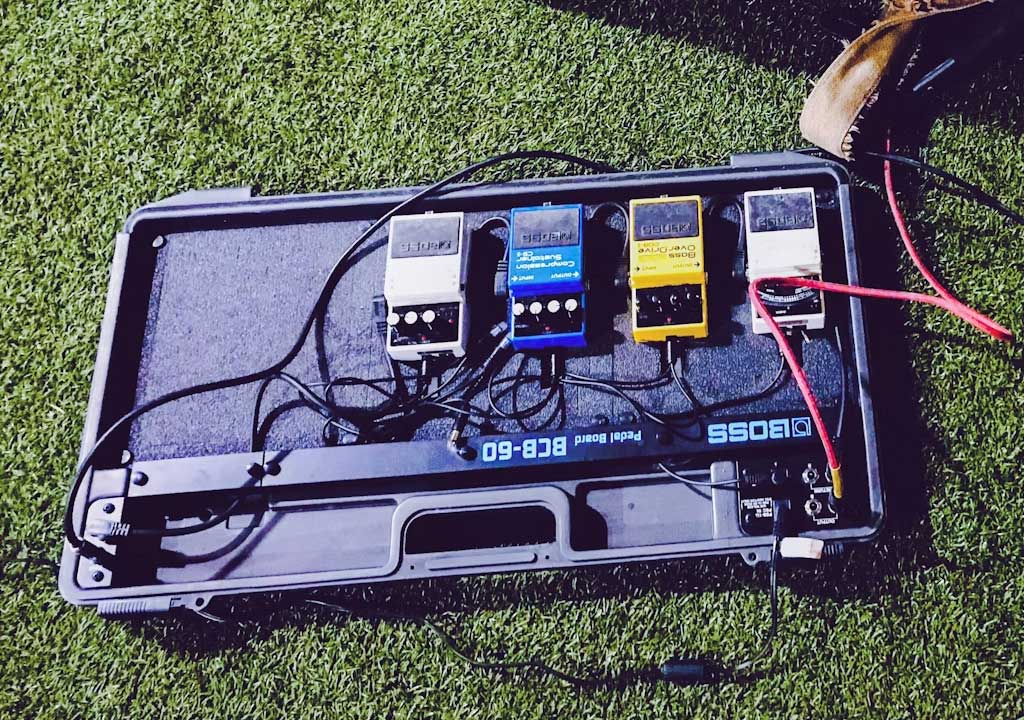
A guitarist in a touring rock band needed a compact board with a reliable tuner, a drive, and a delay. They built a small aluminum frame with a 12" x 9" base, mounted a compact isolated power supply underneath, and used a center patch panel. The result was a 1.5 kg board with excellent shelf-life. The power supply fed four outputs; the tuned pedal remained close to the input, while the delay sat toward the back, minimizing cross-talk. The entire setup fit under a small airline standard case and survived a cross-country tour with minimal maintenance.
Case study 2: A modular, weather-resistant board for outdoor gigs
Another player, playing in a reggae/ska band, needed weather protection for outdoor gigs. They built a small flight-case-style chassis with a gasketed lid and shock-absorbing foam interior. The board held eight pedals and a compact power supply. A removable top panel allowed quick access to the patch cables and power distribution. The board survived misty outdoor stages and a few rainstorms by simply adding the rain cover, and it was light enough to carry in one trip to the stage with minimal strain.
Case study 3: A flexible, scalable 12-pedal rig
A session guitarist required a scalable rig to cover multiple genres. They implemented a modular rail system with a core 6-pedal module and a detachable expansion module. Each module used a separate power supply and patch panel. When not used, the expansion module could be removed and stored in a separate case. This approach offered road readiness and future expansion without overhauling the entire rig each time.
Final Thoughts: Why a Rugged Compact Pedalboard Pays Off
Road gigs are unpredictable. A well-built, compact pedalboard reduces risk, saves setup time, and preserves your tone. The best boards balance a thoughtful layout with durable materials, clean power, and robust patching. They are not the flashiest parts of your rig, but they are foundational to consistent performance-where the music matters, not the gadgets.
Remember these core principles as you design or upgrade your own board:
- Plan first: Clarify pedal count, power needs, space, and the environment you'll be playing in.
- Choose durability without overcomplicating the build: A compact board should be rock-solid but maintainable.
- Keep power clean and isolated to avoid noise and instability.
- Maintain tidy signal routing with short cables, proper shielding, and clear labeling.
- Build for serviceability: You'll thank yourself when you need to swap a pedal, re-route a cable, or upgrade components on the road.
As you embark on building your rugged compact pedalboard for the road, approach it as a craft project with real-world constraints. The result should be reliable, transportable, and easy to maintain. And when you walk onto the stage with a board that's ready for anything, you'll be able to focus on what you love-the music-and not the gear tangles or power issues that can derail a performance. May your tone stay pristine, your setup stay quick, and your road trips stay memorable for all the right reasons.
Happy building, and see you on the road with a board that's built to endure and designed to inspire.
LIKED THIS ARTICLE? SHARE IT: