











Common Pedalboard Setup Mistakes and How to Avoid Them


Common Pedalboard Setup Mistakes and How to Avoid Them
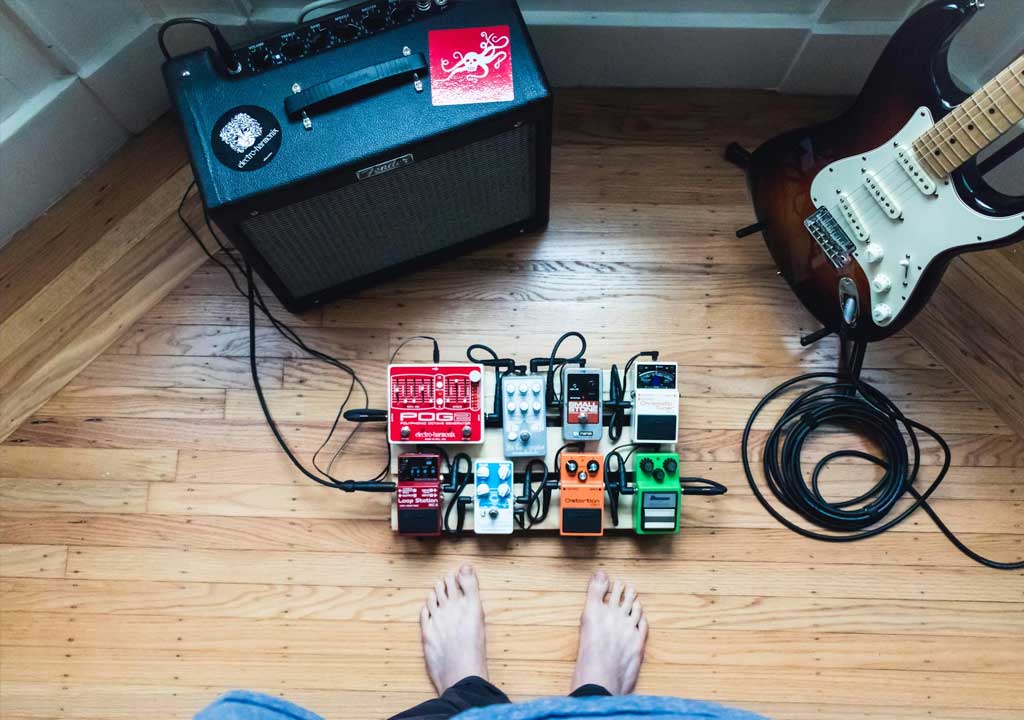
A pedalboard can be the difference between a good guitar tone and a great one—cleanly organized, reliably powered, and easy to tweak in the heat of a live gig or a long studio session. But even seasoned players fall into the same traps: tangled cables, noisy power, and a pedal order that sucks the life out of your signal. This post runs through the most common pedalboard setup mistakes and practical, actionable tips to avoid them. Whether you’re building a minimalist two- or three-pedal chain or a full-blown live-board with a dozen effects, you’ll find guidance you can apply today.
1. The wrong pedal order
Order matters because each pedal shapes your signal in a way that affects subsequent pedals. A classic starting point is:
Tuner ? Dynamics/Compressor ? Drive/Boost ? EQ/Filter ? Modulation ? Time-based (Delay, Reverb) ? Volume
That said, guitarists fit pedals to taste, and there are valid deviations. For instance, some players prefer a compressor after distortion to keep dynamics under control, while others push a boost before gain pedals to push the front end harder. The key is to avoid a chaotic chaos of pedals where every change muddies your tone. A common mistake is stacking time-based effects before gain, which can make repeats sound muffled or wash out your attack.
How to avoid:
- Start with the conventional order and experiment in small increments, keeping a baseline you can revert to.
- Place time-based effects after gain pedals so repeats stay clear and intelligible, unless you’re intentionally shaping pre-echo textures.
- Use a programmable looper or a small DI test rig to A/B pedal order changes quickly.
- Label each patch or board section so you can reproduce a preferred order in future gigs or sessions.
2. Power supply chaos: underpowered, daisy-chaining, and ground loops
Power is the unsung hero of your tone. A noisy, sagging, or poorly grounded supply can introduce hum, crackles, hiss, and unpredictable behavior. Common mistakes include daisy-chaining pedals from a single adapter that isn’t isolated, mixing 9V and 12V pedals on the same rail, or trying to pull more current than a supply can deliver. These issues become especially painful on stage where you need consistency from the moment you power up.
How to avoid:
- Use an isolated, multi-output pedal power supply with enough total amperage for all pedals (check each pedal’s draw in mA).
- Match voltage and polarity as required by each pedal; some pedals need 9V, others 12V or 18V, and many are negative polarity.
- Prefer separate rails for high-current pedals (especially power-hungry drives or wireless units) to minimize noise coupling.
- Consider boosting isolation for sensitive devices (tuner, analog delays) if you notice hum when you touch knobs.
- Label power taps and keep a simple spare connector set for quick field fixes.
3. Neglecting a buffer or misusing true bypass
True bypass pedals can be wonderful, but on a long signal chain they can contribute to high-frequency roll-off and dullness if you don’t manage the chain carefully. A long guitar cable and a stack of true-bypass pedals may cause tone loss, especially when your board is large or when you’re running long cables to and from pedals. Some players don’t realize they benefit from a buffer at the start of the chain or near the end to preserve high frequencies after dozens of true-bypass pedals.
How to avoid:
- Incorporate a buffer pedal early in the chain if you’re running many true-bypass pedals or long patch cables.
- Position a buffer near the amp input or at the end of the chain to preserve the overall tone when the signal exits the board.
- Evaluate if each pedal is truly bypassing cleanly; some pedals’ true-bypass designs aren’t perfect and can still contribute noise.
- When in doubt, test the tone with the buffer on and off to hear the difference in your setup.
4. Patch cables: length, quality, and routing chaos
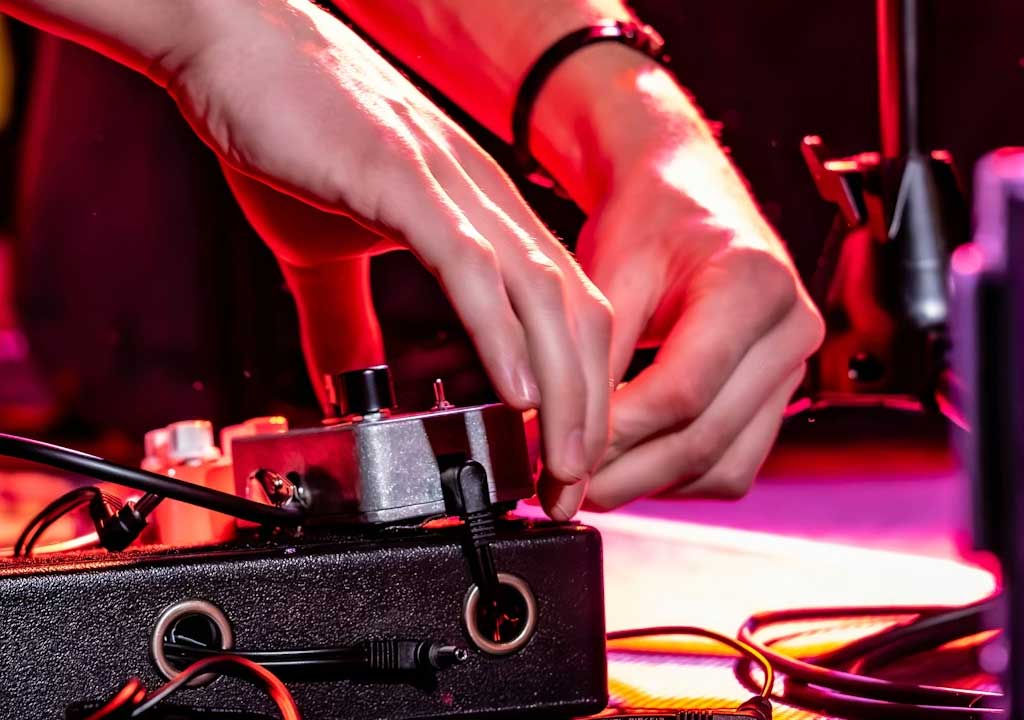
Cables inside a pedalboard can be a source of noise and failure if they’re the wrong length or poorly routed. Excessively long patch cables add capacitance, which can dull high-end frequencies and introduce subtle noise. A poorly organized tangle can also create torque on jacks, causing intermittent connections. Cable quality matters, too; cheap, unshielded cables are more susceptible to radio interference and microphonics when knocked or bumped during a gig.
How to avoid:
- Prefer short patch cables (6–12 inches is common for many boards); measure and tailor cables to your layout.
- Use good shielded patch cables with durable connectors; test with torque to ensure they won’t pull out easily.
- Label cables at both ends to help with quick setup/breakdown and to prevent plugging into the wrong jacks during a show.
- Route cables along the edge of the board, using cable channels or velcro ties to keep paths tidy and prevent snagging.
5. Grounding and noise: hum and buzz
Hums, buzzes, and crackles are often the most frustrating issues because they seem to appear out of nowhere. Ground loops are a frequent culprit when multiple devices share power or grounding paths, especially with amps, pedals, and wireless devices all plugged in. EMI from stage lights, computer screens, or other gear can also introduce unwanted noise. If you’re chasing a sound rather than a signal, you’re likely dealing with grounding or shielding problems.
How to avoid:
- Use a properly isolated power supply and keep audio and power runs separate where possible.
- Keep instrument and guitar cables away from power cables to reduce interference.
- Check and tighten all ground connections. A single loose ground can create hum that worsens as you touch a knob or switch a pedal.
- Shield cables, particularly for pedals sensitive to EMI (modulation and delays can be more susceptible).
- Consider a ground-lift adaptor for line-level devices if you suspect a ground loop, but only use it with caution and awareness of potential safety concerns.
6. Not testing in real-world conditions
A pedalboard that sounds great in your quiet rehearsal space may falter on stage due to lighting, audience noise, or the spatial characteristics of the venue. It’s easy to assume your setup is flawless when you’re alone with a studio monitor. But gear behaves differently when the sound pressure level climbs, when you’re switching patches rapidly, or when you’re playing through a different amp or cab.
How to avoid:
- Perform a full-band or full-room test before a gig whenever possible; if not, simulate stage conditions (dim lights, louder room ambience) during practice.
- Test every patch both clean and with drive, including any boost in front of or after time-based effects, to understand how they respond to real playing dynamics.
- Bring a spare patch cable and a couple of power adapters to field test a “just in case” setup.
- Record a quick re-amp test in your practice space to catch tonal shifts you might miss by listening in isolation.
7. Impedance and connection order misunderstandings
Guitar pedals aren’t just general-purpose electronics; many have specific input impedance characteristics that affect tone, touch sensitivity, and sustain. Placing a high-impedance (guitar) source into a low-impedance effect input can dull the signal, while certain pedals (like fuzz or dirt pedals) are sensitive to what’s feeding them. Stage or recording setups that ignore impedance can sound fizzy or opaque, especially with vintage or boutique pedals.
How to avoid:
- Maintain the natural guitar signal path into pedals designed to receive high-impedance input (check the pedal’s spec sheet for input impedance values).
- Group pedals with similar tonal characteristics, but avoid mixing buffers and true bypass devices in a way that creates inconsistent impedance paths across patches.
- When in doubt, test the effect’s response with different front-end sources (guitars with single-coil vs humbucker pickups) to hear the difference.
8. Heavy pedal placement and unstable boards
Roll a chair over a board, and you’ll learn quickly how fragile a thinly supported board can be. Heavy pedals placed at the far end of a board can lead to tilt, wobble, and even straps coming loose during a performance. Damage to jacks, rattle from footfalls, or a pedal tipping over can interrupt a gig and require a break in play to fix.
How to avoid:
- Distribute weight evenly: heavier pedals toward the center or closer to the power supply, light pedals toward the edges.
- Use a sturdy board with non-slip feet and secure pedal placement with quality Velcro or mounting hardware designed for the weight and dimensions of your pedals.
- Use a pedalboard case or a flight-case for transport; consider a velcro or hook-and-loop system that’s easy to re-configure on the road.
- Test mobility by simulating stage movements—step on a threshold and see if any pedal shifts or rattles.
9. Lack of patch memory, labeling, and quick-switch discipline
If you’re playing live or tracking, you’ll frequently switch between different tones. A board that’s not organized for quick access can turn a simple patch change into a distraction, leading you to skip a crucial effect or misdial a knob in the heat of the moment. It’s amazing how much time a momentary hesitation can consume, especially in a tight set.
How to avoid:
- Label pedal positions and input/output jacks with color codes or small stickers for quick visual identification.
- Use a pedalboard with a logical layout that mirrors how you play—your most-used sounds in easy reach; less-used sounds further away.
- Avoid tapping the wrong patch by using a dedicated foot-switch to switch channels or a separate loop switcher for critical sounds.
- Consider saving patches or using a foot controller or MIDI switcher to recall a set of effects at the press of a button.
10. Skimping on travel-ready durability and maintenance
A board that survives one gig but fails on the next is a problem. Jostled by transport, humidity, or temperature changes can loosen jacks, corrode connectors, or cause delicate cables to crack over time. Regular maintenance is not glamorous, but it pays off in reliability, tone, and ease of setup—especially if you’re touring or playing frequent studio gigs.
How to avoid:
- Inspect and clean connectors regularly; use contact cleaner on jacks and switch contacts if you notice crackle or crackling noise.
- Keep spare parts: extra patch cables, power cables, a small screwdriver, and a multi-tool for quick field adjustments.
- Dry storage and climate-controlled cases help preserve the integrity of pedals, cables, and the power supply.
- Create routine maintenance checks: weekly quick test of each pedal, power rails, and cable integrity before rehearsals or gigs.
Putting it all together: a practical checklist you can use today
If you’re overwhelmed by the many potential pitfalls, you’re not alone. Here’s a condensed, practical checklist you can print and run through before your next gig or recording session:
- Decide on a baseline pedal order and test small changes gradually.
- Use an isolated, adequately powered supply; calculate total draw and check polarity and voltage requirements.
- Build a buffer-aware chain; consider placing a buffer early or late as needed.
- Use appropriate patch cable lengths and shielded cables; label everything.
- Address noise with proper grounding, shielding, and careful routing of power and audio signals.
- Test under stage-like conditions and record quick references to compare tones.
- Be mindful of impedance; match front-end sources with pedal inputs when possible.
- Distribute weight on the board and secure everything for transport.
- Label patches, save configurations, and consider a switcher for quick access.
- Maintain your rig: clean connectors, inspect cables, and keep spares on hand.
Final thoughts: tailor to your setup, then document it
Every guitarist’s rig is unique. The “perfect” pedalboard is less about following a universal blueprint and more about finding a setup that preserves your tone, remains reliable under pressure, and is repeatable from rehearsal to stage. Start with a solid foundation—the typical order, a robust power solution, a buffered front end, and clean, well-labeled cabling—and then customize based on your gear, playing style, and confidence with maintenance. Document changes you make so you can reproduce or revert as needed. A well-thought-out board is not a luxury; it’s a sonic investment that pays dividends in clarity, consistency, and speed of your creative work.
Whether you’re a tidy minimalist or a sprawling studio board enthusiast, avoiding these common mistakes will help you unlock more of your guitar’s personality. With a few practical adjustments—clean power, careful ordering, reliable cabling, and a touch of organization—you’ll be playing with greater confidence and enjoying tone that translates from room to stage.
31.03.2026. 05:11