










Onstage Ready: Fast Load-In and Soundcheck with a Small Pedalboard

Onstage Ready: Fast Load-In and Soundcheck with a Small Pedalboard
Whether you're a touring musician, a weekend warrior, or a songwriter doing a quick club gig, a small pedalboard can be your best friend for getting on stage fast and sounding great with minimal setup drama. The trick isn't cramming every effect into every pedal, but rather designing a reliable signal chain, a repeatable load-in routine, and a smart soundcheck workflow that minimizes guesswork once you're under the lights. This guide is focused on fast load-ins and efficient soundchecks specifically tailored for players who run a compact pedalboard-think six to eight pedals, a solid power solution, and a few smart stage hacks that keep you moving forward instead of spinning your wheels on the edge of tech trouble.
1. Start with a Minimal, Purposeful Pedalboard
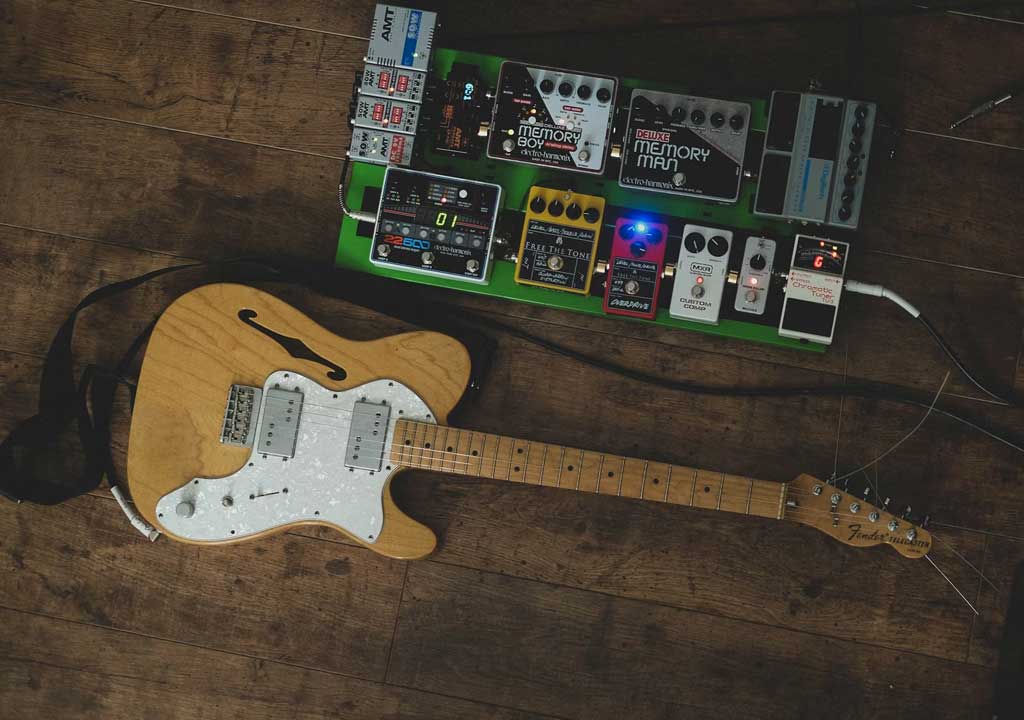
Your pedalboard should be a blank canvas for your core sounds, not a museum of every idea you've ever chased. A small pedalboard forces you to curate the essential tones and keep a tight signal chain. Here's how to optimize for speed and reliability:
- Prioritize the core sounds you actually use most often in live situations. A clean boost or overdrive, a reliable delay, a reverb, a dynamic compressor, and a tuner are often enough for many styles. If you need modulation, opt for one versatile pedal rather than three individual boxes.
- Choose a simple, rugged enclosure with a top-load design or a shallow, low-profile board. The goal is to minimize the chance of pedals sliding during transport or on a crowded stage.
- Plan the signal order for fast, error-free tuning and minimal cable tangling. A common, reliable order is Tuner → Dynamic/Drive → Modulation → Time-based (Delay) → Reverb. If you're using amp models or an amp-direct setup, you can place the tuner at the front and the amp/DI later in the chain.
- Keep power clean and organized. A single, well-made power supply with isolated outputs helps reduce hum and ground loops that can ruin a soundcheck. Label each output so you know which pedal is fed by which cable in a pinch.
2. Pre-Gig Preparation: Make a Plan
Preparation before you even arrive at the venue is the best way to speed up load-in and soundcheck. Create a simple, repeatable plan you can pull out of your bag when the clock starts ticking.
- Create a "Load-in and Soundcheck Plan" that lists: gear to bring (pedalboard, power supply, patch cables, instrument cable, spare guitar, spare tuner battery, spare mic clip, DI or pedal-friendly XLRs), the order you'll set things up, and the soundcheck checkpoints you'll hit.
- Pre-cut and label your patch cables and instrument cables to your board layout. A color-coding system for signal cables (e.g., red for guitar to board, blue for pedal-to-pedal, green for send/return) reduces mistakes under pressure.
- Draw a simple stage plot and a one-page rider for your techs. Include your preferred pedal order, the exact location of your board, power needs, and how you want DI and amp-cab routing handled (DI to FOH vs. amp mic, if applicable). A clean plot prevents confusing questions during load-in.
3. Quick Load-In: Stage Time-Savers
Fast load-in is all about logistics as much as gear. The more you can do before you reach the venue, the smoother your set will be.
- Pack smart. Put your pedalboard and power supply in a dedicated, clearly marked bag or case. Use a foam insert or a lid with a small "stage-ready" toolkit (guitar picks, spare strings, a small multi-tool, zip ties, Velcro strips, a few extra patch cables).
- Pre-wire your pedalboard in the rehearsal room or your car. If you can, test the board's power, all footswitches, and the cable routing before you leave. A quick, last-run-through at home can catch problems you'd otherwise chase on stage.
- Use a "drop-off" strategy at the venue. If possible, arrange for the tech to allow you a brief stage drop-off where you can position your board and walk through routing from backstage, minimizing stage time and crowding around you on stage.
- Arrive with a plan for stage setup. When you crest the stage, you should know exactly where your board sits, how your instrument cable runs to the guitar, how the power is plugged in, and where the tuner sits in the chain. A simple diagram taped to the back of your guitar case or on your pedalboard case can guide you quickly.
- Keep your feet free and pedals anchored. Use a low-friction mat under the pedalboard and a small strap or Velcro grips on the legs to keep the board from creeping. A tidy, non-slip setup reduces accidental knob taps or pedal shifts during a performance.
4. Cable Management and Wiring
When you're in a hurry, tangled cables become a time sink and a tripping hazard. But good cable management is also a recipe for reliable sound.
- Use short patch cables between pedals (6-12 inches) and keep your input/output clear. Fewer, shorter cables reduce the risk of accidental unplugging and make the board more stable.
- Route power cables away from audio signal paths. If you're using a power supply with multiple outputs, try to keep the most "noisy" devices on isolated outputs from sharing power with your sensitive audio lines. A little distance can reduce hum and buzz.
- Label every cable. A simple label on each end of a patch cable helps you rebuild the chain quickly in a dim stage environment. If you're sharing gear with a band, this becomes even more valuable.
- Secure cables to the board. Velcro strips for signal paths, and a cable loom or zip ties for longer runs, keep everything from shifting when you step on the board or when you lean in to adjust your settings during the set.
- Use a small personal "bridge" DI or direct path to FOH when you're not sure about the stage's backline. A DI box can take your guitar signal straight to front-of-house, bypassing stage cab issues, and it's handy for quick soundcheck lines.
5. Soundcheck Strategy for a Small Pedalboard
With a compact pedalboard, your soundcheck can be fast, precise, and repeatable. The goal is to lock in your core tone and then verify that every piece serves the performance, not just your practice room.
- Do a quick tuner check first. A reliable, visible tuner ensures you're in tune with the room and with your bandmates. If you use drop-tunings or alternate tunings for a song, check those parts as well during the early stage of the soundcheck.
- Establish your baseline tone. Set your amp or amp-model to a comfortable, clean baseline if you're playing through a PA. Dial in one or two key tones from your pedalboard, emphasizing the core sound (e.g., your overdrive or boost, your delay's tempo and feedback, your reverb level).
- Check noise and ground issues. With a small pedalboard, a lot of tone problems come from ground loops or bad cable runs. If you hear hum, identify whether it travels with the guitar or the pedal chain, then swap a power outlet or try a different DI box. Ask the tech nearby to test the stage's ground if you're confident in the basics and the problem persists.
- Verify FOH vs. stage balance. Your guitar should sit well with the vocal mic and the rest of the band in the stage mix. If you're hearing your own signal too loud or too soft, adjust your pedal levels and/or the PA mix with your sound engineer's help. The goal is a balanced stage sound without fighting the PA for space.
- Lock tempo and effect levels. When you're running a delay or a modulation effect, set a consistent, drummer-friendly tempo. Confirm that the pedal's effect level and mix are not burying your dry signal when you're playing faster passages.
- Test your ASA (ASAP) patch. If you have two or three signature sounds, verify that the patches you'll perform in a given song are still intact after the stage transitions. A quick run-through of a couple of the most-used patches shows you've got your rig dialed in.
6. In-Ear Monitors vs. Stage Monitors
Deciding between in-ear monitors (IEMs) and traditional stage monitors can affect your load-in and soundcheck approach. For a small pedalboard, IEMs can simplify stage volume control and make your personal mix more predictable, but they require a bit more setup discipline.
- IEMs: Use a dedicated wireless or wired IEM system and have a clear personal mix. With IEMs, you're less reliant on the stage monitors for your own tone, which can be a blessing in dim clubs or noisy venues. However, you'll need to tell the sound engineer specifically what you want in your mix and how much of your pedalboard effect you want to hear.
- Stage monitors: If you're relying on stage wedges, you'll want to check your board's level against the stage volume. A compact board often means you only need a single, well-balanced monitor mix. Ensure you're not fighting stage noise for your core tones; that's where careful I/O routing and DI usage pays off.
- Quick tips: If you're using IEMs, consider a safety mix with a small amount of ambient room tone so you don't feel disoriented when you glance up between phrases. If you're staying with wedges, confirm that your pedalboard's effect levels sit in front of the monitor's own feedback loop so you don't create a squeal with the PA system.
7. The Signal Chain: Pedalboard, DI, and the Backline
Understanding and optimizing your signal chain is the backbone of a fast load-in and a reliable soundcheck. Your small board should be purpose-built to preserve signal integrity from guitar to FOH or to the amp.
- Guitar → Tuner → Overdrive/Boost → Modulation (if used) → Delay → Reverb → DI (optional) → PA or Amp
- If you're using amp modeling or a direct-to-PA setup, you may not need a mic on a cabinet. In this case, your DI box becomes your primary output to FOH. Check that your DI is properly grounded and that your output level matches the PA's input expectations. Some DI boxes have a ground lift switch; use it if you encounter hum caused by ground loops.
- Cab-sim or IRs: If you're playing through a PA rather than a real cabinet, you'll likely rely on a cabinet-emulation or impulse response (IR) pedal or interface. Make sure the IR is tuned to the stage's acoustics, or keep a couple of generic profiles on hand for different rooms.
- Controller or switcher: A small, reliable footswitch or compact MIDI controller can help you switch between your two or three main patches without bending over to reach pedals. If you use it, keep the control surface out of the line of sight for quick, confident changes while playing.
8. Pedalboard Layout and Footprint
A thoughtful layout keeps you from stepping on the wrong pedal in the heat of a performance and helps you move quickly through patches during a soundcheck.
- Create a repeatable grid. A consistent left-to-right or toe-to-heel layout lets you rely on muscle memory during a show. For example, keep your tuner at the far left, your drive at the middle, and your time-based effects at the right.
- Consider pedal footprint. If you're working with a shallow board, place your largest or most used pedal near the fore edge for easy access. Smaller pedals can sit toward the back, where your foot won't accidentally press them during a fast run.
- Use anti-slip pads. A few non-slip pads beneath each pedal help keep pedals from sliding if you need to stomp quickly. For extra grip, consider a bit of double-stick tape on the underside of the board to prevent movement on slick stages.
- Label and map. A tiny label under or near each pedal helps you remember your order when you're switching songs. If you're sharing gear or you're a multi-band rider, this labeling saves time explaining chain order to sound techs and crew.
9. Power and Grounding: The Quiet, Reliable Path
Power reliability is often overlooked until it becomes a problem. A stable power setup is essential for fast load-ins because it minimizes chatter, pops, and unwanted noise that can derail a soundcheck.
- Use a dedicated power supply with isolated outputs for your pedals. Isolated outs prevent ground loops between pedals and reduce noise in your signal chain.
- Don't daisy-chain power from an unreliable outlet. If a venue's power is questionable, bring a small power strip or a backup power cable and test the outlet during the soundcheck.
- Ground lift cautiously. If you experience a hum that won't go away with standard troubleshooting, a ground-lift switch on a DI or on your power block can help separate grounds, but use it only when you're sure it won't introduce safety risks or damage equipment.
- Battery backups for critical pedals. A rechargeable battery for your tuner or a compact pedal that can run on battery can be a lifesaver if you're caught in a power pinch. This is especially useful if you're running a minimal, modular setup where a single failure can derail your entire chain.
10. Onstage Meters and Micro-Checks: Quick, Reproducible Checks
In a pinch, having a quick mental checklist you can run on stage helps you feel confident and stay in the moment instead of chasing issues. Here are micro-checks you can perform in under 60 seconds between songs or after a pause:
- Tuner check: quick drop-in to confirm tuning is stable. If your guitar has a tremolo or a whammy bar, a quick retune helps keep the performance tight.
- Signal path check: glance at your DI or amp inputs and confirm signal presence. If you're using a DI, listen for a consistent signal level and no unusual pops when you switch patches.
- Level check: ensure your pedal output levels aren't causing distortion in the PA and that your front-of-house engineer has enough headroom to mix. A quick glance at your pedal's output LED or a quick test of your patch's loudest section can catch level issues early.
- Ground awareness: if you hear a buzz or hum, check for a loose power connector, a misrouted cable, or a ground loop that needs lifting. A quick swap of the outlet or re-seating a cable can often resolve it.
11. Troubleshooting Common Pitfalls
No plan is perfect, but you can anticipate some common live sound issues and have a ready-to-deploy fix for each. Here are frequent pedalboard-related problems and how to handle them fast:
- Problem: A pedal doesn't switch or a patch doesn't engage. Quick fix: re-seat the pedal's power cable or patch cable; swap to a spare cable if available. If you're using a MIDI controller, ensure the MIDI channel and program change messages match your patch order.
- Problem: Noise or hum when you step on the pedal. Quick fix: check ground relationships. Move a power cable away from signal cables, or switch to an isolated output on your power supply. If you're using a DI, enable the ground lift on the DI if necessary.
- Problem: Delay or modulation not keeping time with the tempo. Quick fix: verify the tempo setting, tempo sync on the pedal, or re-trig the effect's time-based settings after changing songs. A quick, pre-set tempo cue on a beat-by-beat meter can save you time in the moment.
- Problem: Stage noise or feedback due to loud guitar amps or stage monitors. Quick fix: isolate the guitar's signal path from the monitor's input, and work with the sound tech to balance stage levels so you're not fighting feedback. Consider a slightly lower stage volume or an adjusted EQ at the FOH to reduce problematic frequencies.
12. Quick-Reference Cheat Sheet
Having a one-page reference handy can save you precious seconds during load-in and soundcheck. Here's a compact cheat sheet you can print or store on your phone:
- Core pedal order: Tuner → Drive/Boost → Modulation → Delay → Reverb
- Power: Isolated outputs preferred; avoid long daisy-chains from one outlet
- Cables: Short patches, label ends, route away from power lines
- DI: Use when going to FOH; check ground and level
- Soundcheck: Tune, baseline tone, level check, micro-check
- Stage plan: Stage plot, pedal location, power outlets, pedal routing
- Emergency kit: spare patch cables, batteries, multi-tool, tape, Velcro
Conclusion: A Lightweight Rig That Travels Fast and Plays Loud
A small pedalboard doesn't have to mean compromise. In fact, it can be a strategic advantage: less gear to set up, fewer cables to manage, and a more repeatable performance routine. The key is to plan ahead, assemble a board that suits your essential sounds, and cultivate a fast, reliable load-in and soundcheck workflow. With a concise signal chain, careful cable management, a dependable power setup, and a rock-solid plan for stage setup and soundcheck, you'll be ready to step into the spotlight and deliver your best tone with confidence-every night, in every venue.
Remember: your gear isn't just what you play through; it's how quickly you arrive on stage with your sound ready to go. A minimal rig, paired with a well-practiced load-in and soundcheck routine, makes you not only onstage ready, but also the musician who can guarantee a consistent, high-quality performance no matter the room. So curate your pedalboard, map your plan, and practice your micro-checks until they become second nature. When you're standing in front of a crowd, there's nothing more powerful than knowing you've got your tone locked in and your setup streamlined to perfection.
LIKED THIS ARTICLE? SHARE IT: